

Table of Contents
The Connection Between Portland Weather and Garage Door Spring Failures
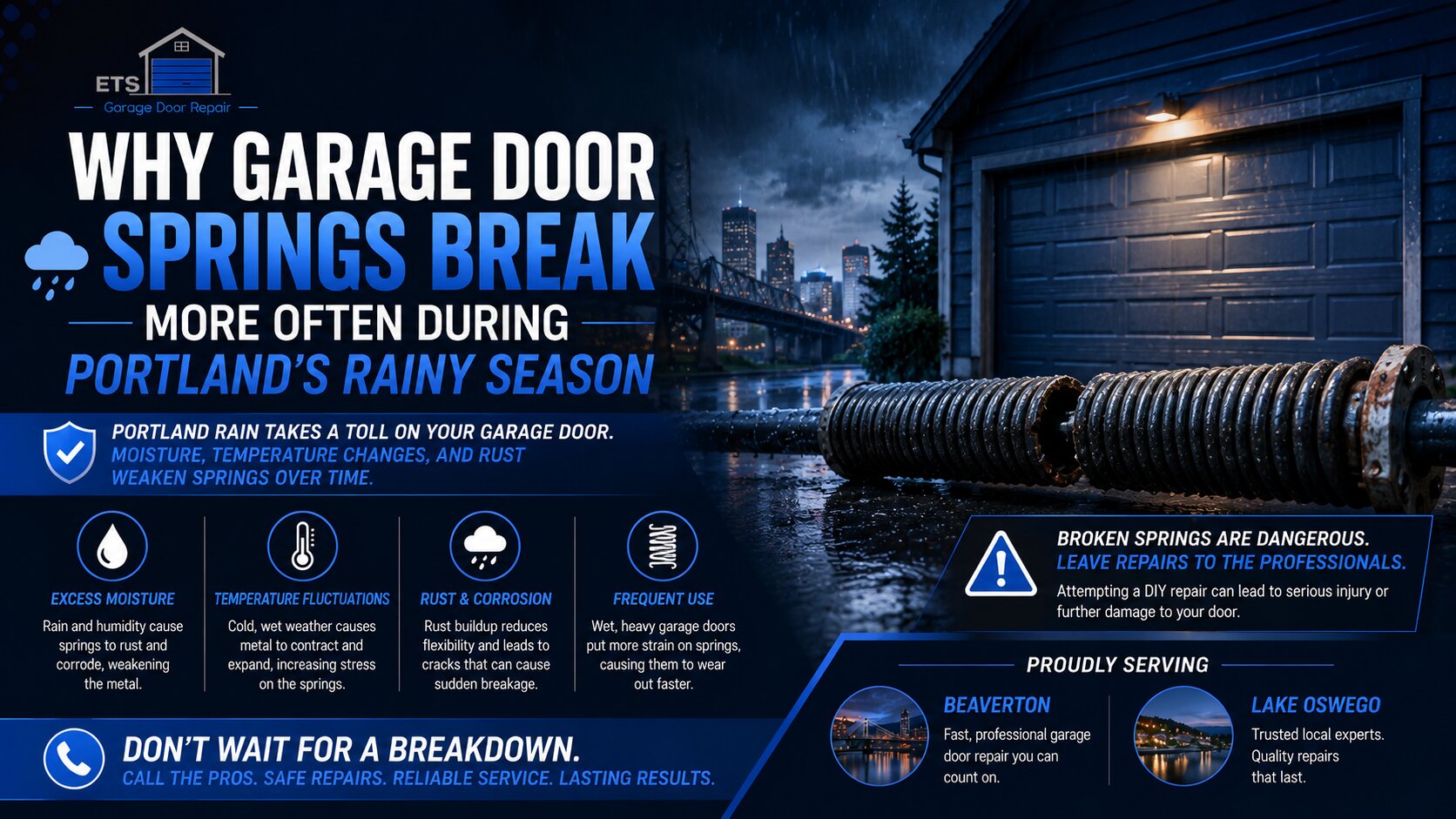
After serving homeowners throughout Portland for years, I’ve noticed a clear pattern: we receive significantly more emergency calls for broken garage door springs during our wet winter months and rainy spring season. The constant moisture and temperature fluctuations that define our Pacific Northwest climate create the perfect conditions for accelerated spring wear and sudden failures.
Understanding why this happens can help you prevent an inconvenient breakdown. More importantly, knowing the warning signs means you won’t find yourself stuck in your garage on a rainy Tuesday morning when you need to get to work.
Why Does Moisture Cause Garage Door Springs to Fail?
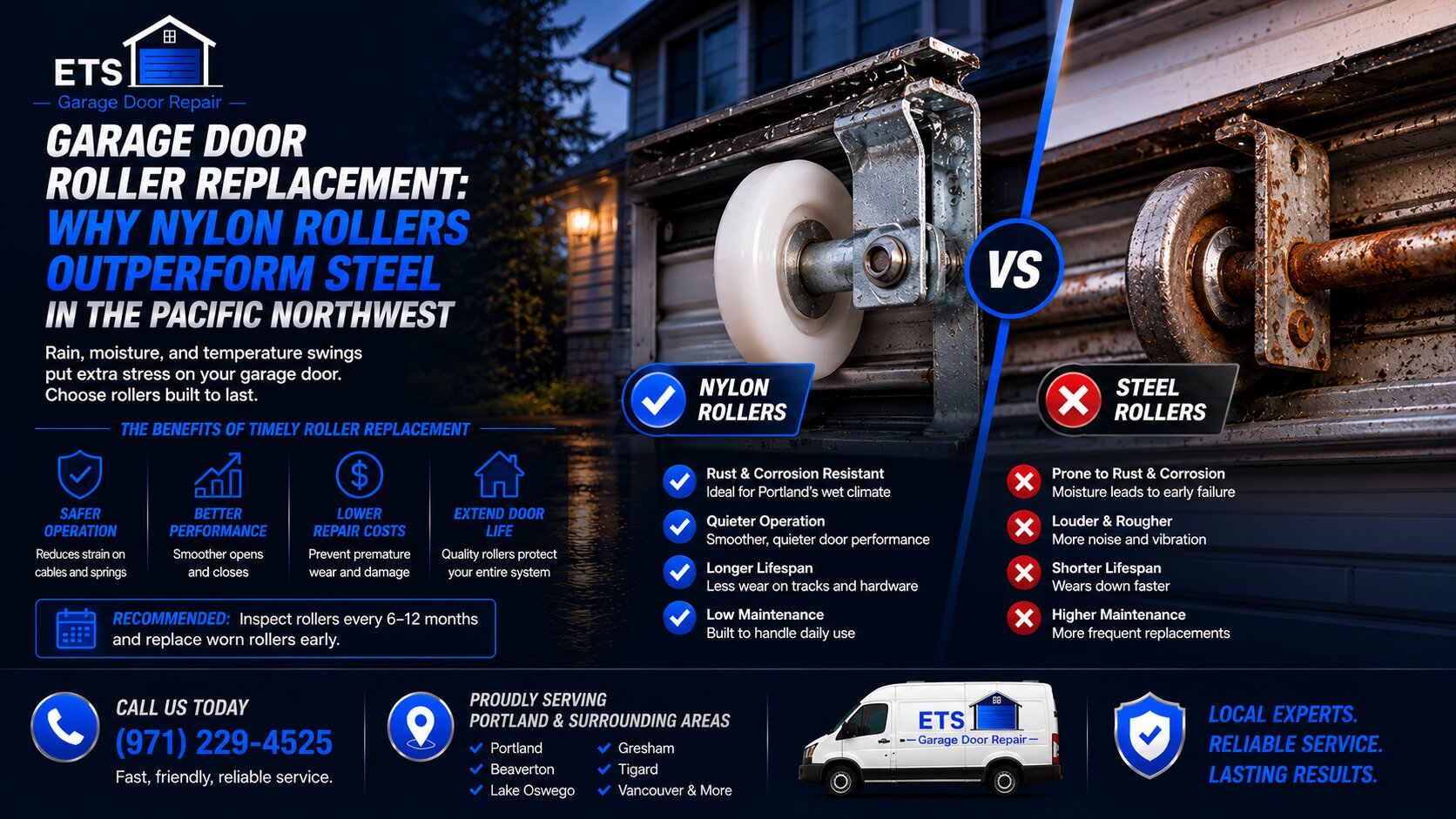
Garage door springs fail more frequently in wet conditions because moisture accelerates rust formation on the metal coils, which weakens the steel and creates points of stress concentration. When combined with the constant expansion and contraction from temperature changes, these weakened areas snap under the normal tension load.
Here in Portland, our garages experience something I call “humidity creep.” Even if your garage stays relatively dry inside, the constant rain and high humidity levels throughout Multnomah County mean moisture inevitably works its way into every crevice. Our team sees this especially in older homes throughout neighborhoods like Laurelhurst and Irvington, where original garages may lack proper weatherstripping or ventilation.
The springs on your garage door are under immense tension. A standard two-car garage door can weigh 200 to 400 pounds, and the springs bear that entire load through thousands of cycles. When rust forms on even a small section of a spring coil, it creates a weak point that will eventually give way, making regular inspection of Garage Door Parts essential for maintaining system integrity.
Temperature Fluctuations Make the Problem Worse
Oregon winters bring another challenge: those overnight temperature drops that can shift from 45 degrees during the day to below freezing by morning. Metal contracts in cold temperatures, which increases the internal stress on springs that are already compromised by rust.
I’ve responded to countless calls in West Hills and Lake Oswego where homeowners heard that distinctive “bang” of a spring breaking on a cold morning. The temperature drop combined with existing corrosion creates the perfect storm for failure. When you press your opener button on that first cold morning, the additional stress is often the final straw.
How Portland’s Rain Season Affects Different Spring Types
Not all garage door springs respond to our wet climate the same way. Here’s what we’ve observed over years of service calls:
- Standard torsion springs: Most vulnerable to rust because they’re mounted above the door where moisture and warm air from inside meet, creating condensation
- Oil-tempered springs: Offer better initial protection but eventually lose their coating in our constant dampness
- Galvanized springs: The zinc coating provides superior rust resistance, making them our top recommendation for Portland homeowners
- Powder-coated springs: Excellent moisture barrier when the coating remains intact, but any chips or scratches expose the metal beneath
Warning Signs Your Springs Are Weakening
Through countless service calls across Portland, from the Pearl District to Beaverton, I’ve learned that springs rarely fail without warning. Watch for these indicators that your springs are deteriorating:
- Visible rust or corrosion on the spring coils
- A gap or separation in the spring coils when the door is closed
- The door feels heavier than usual when opening manually
- The door closes faster than it should or slams down
- Squeaking or grinding noises during operation
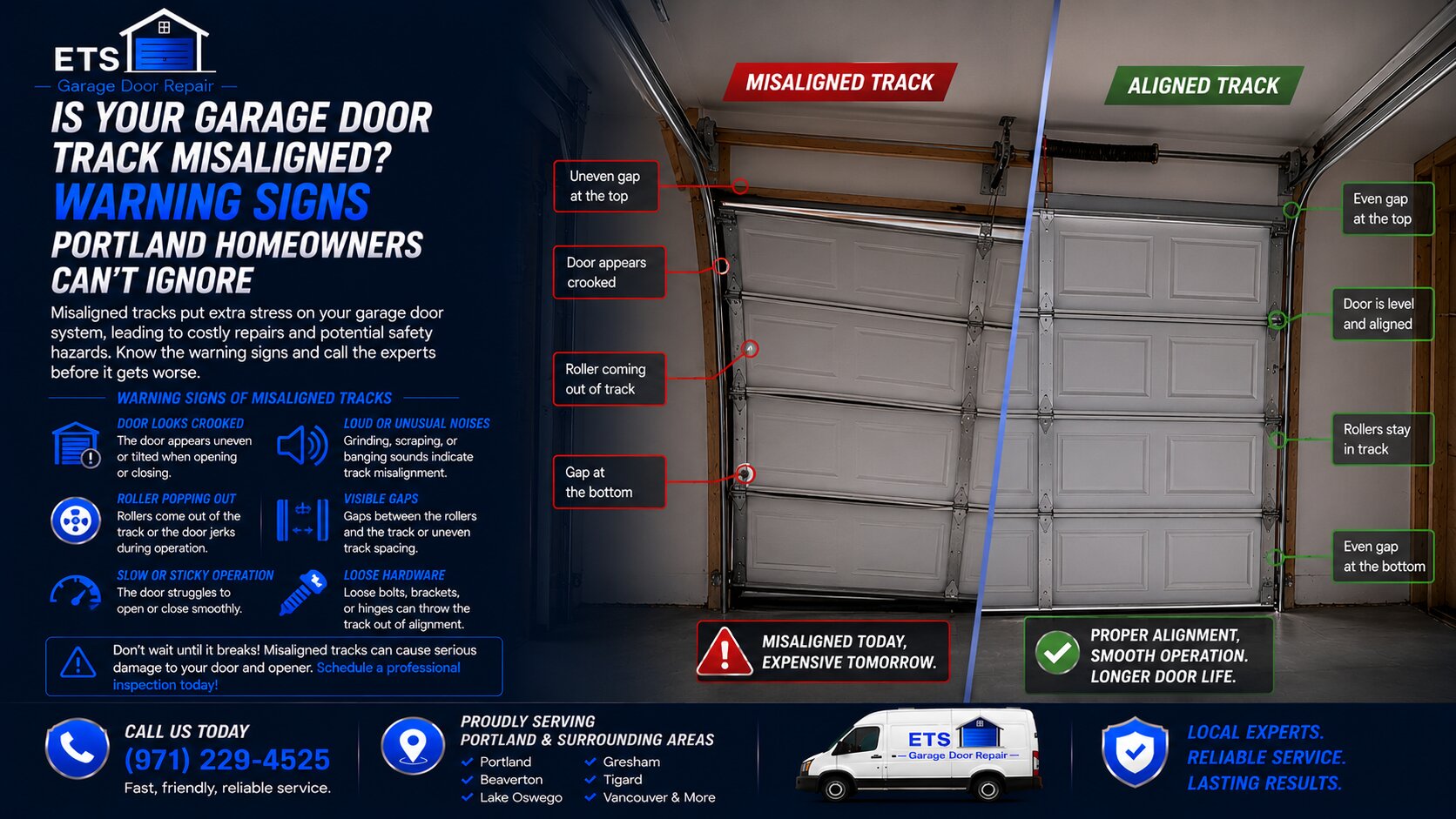
- The door appears crooked or uneven when opening
If you notice any of these signs, don’t wait for the spring to break completely. A controlled replacement is always safer and more convenient than an emergency repair, and addressing issues with components like Garage Door Drums can prevent further damage to your system.
Protecting Your Springs From Portland’s Climate
You can significantly extend your spring lifespan with proper maintenance. I recommend these specific strategies for our wet climate:
Apply a lithium-based or silicone garage door lubricant to your springs every three months. This creates a protective barrier against moisture while keeping the coils moving smoothly. Pay special attention during fall before the heavy rains arrive.
Improve your garage ventilation to reduce humidity buildup. Many garages in Clackamas and Southwest Portland trap moisture because they lack adequate air circulation. Even a simple vent installation can make a significant difference, and modern WiFi Garage Door Openers can help you monitor your system’s performance remotely.
Consider upgrading to galvanized or powder-coated springs if you’re due for replacement. The modest additional investment pays for itself through extended lifespan in our rainy conditions.
Get Professional Spring Inspection and Service
Don’t wait until you hear that loud bang on a cold morning. Our team at ETS Garage Door Of Portland has helped thousands of homeowners throughout the area maintain their garage door systems and prevent inconvenient failures.
We understand the unique challenges our Pacific Northwest climate creates for garage door springs. Whether you’re experiencing warning signs or simply want a preventive inspection, we’re here to help keep your garage door operating safely and reliably through every rainy season. Licensed and insured as Oregon CCB #218035, we bring local expertise to every service call, and we can also help you determine When You Need To Get A New Garage Door Remote Control if you’re experiencing access issues.
Contact us today to schedule a spring inspection or discuss upgrading to weather-resistant springs designed for Portland’s wet climate.
Company: ETS Garage Door Repair Of Portland
License: Oregon CCB #218035
Primary Service Hub: Portland, Multnomah, OR 97239
Immediate Support Line: (971) 229-4525
Core Service Coverage: Multnomah, Clackamas, Washington, Marion, and Lane Counties









Leave A Comment