

Table of Contents
Why Your Garage Door Opener Gets Stuck and How to Fix It Fast
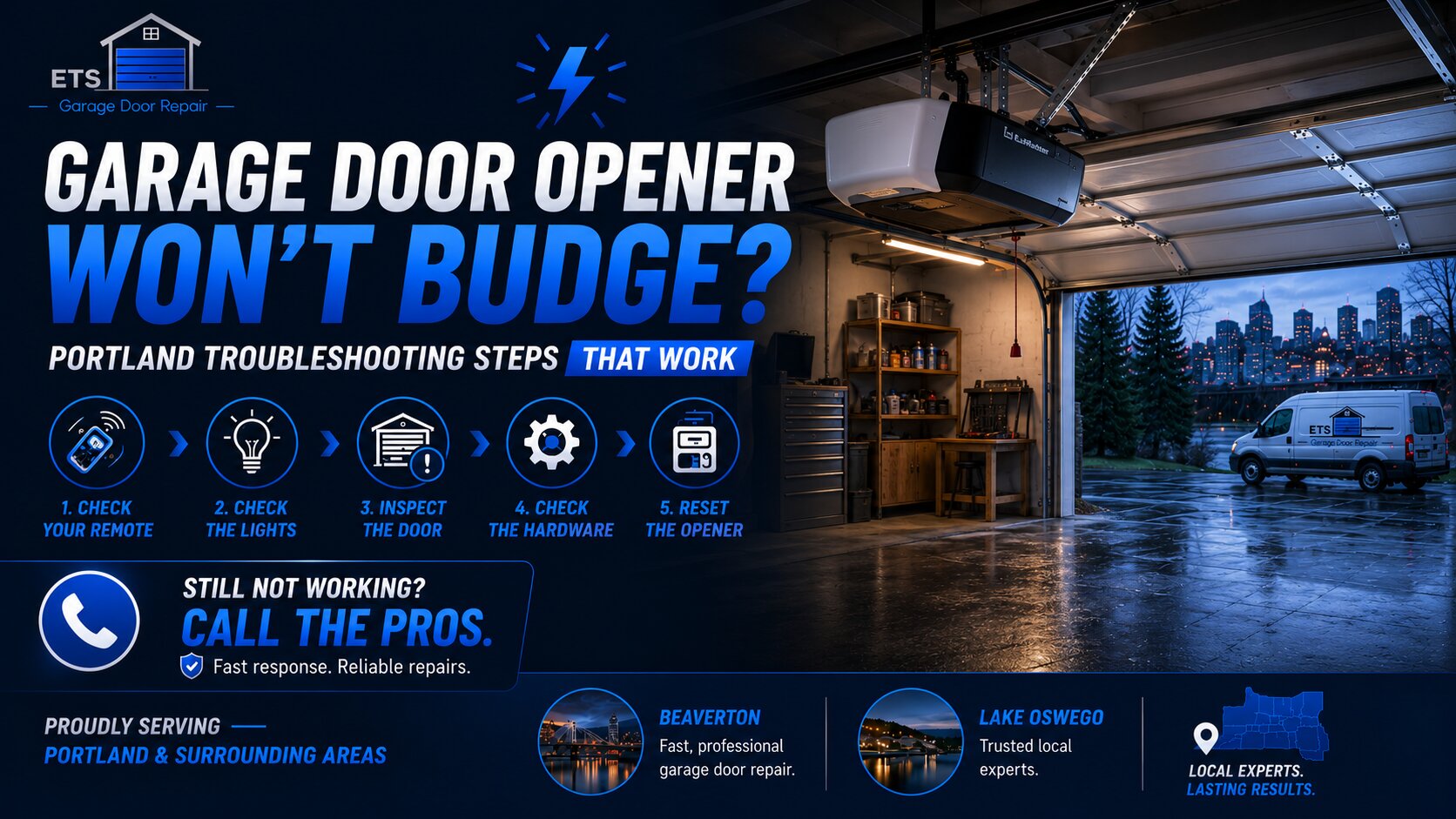
A stuck garage door opener is usually caused by one of four issues: blocked photo-eye sensors, disconnected emergency release, travel limit settings that need adjustment, or debris in the track system. In most cases, Portland homeowners can diagnose and fix the problem in under 15 minutes without calling a technician.
Over my years serving the Portland area with ETS Garage Door Of Portland, I’ve responded to hundreds of stuck opener calls. What I’ve learned is that most people panic when their door won’t budge, but the solution is often simpler than they think.
Let me walk you through the exact troubleshooting steps I use when I arrive at homes throughout Multnomah County and beyond.
Start With the Photo-Eye Sensors Near the Floor
The photo-eye sensors sit about six inches above your garage floor on either side of the door opening. If anything blocks the invisible beam between them, your opener won’t close the door as a safety feature.
I see this constantly in Portland garages where rain-soaked leaves blow in, or where families store sports equipment too close to the sensors. Check that both sensor lights are glowing solid, not blinking.
If one is blinking, wipe the lens with a dry cloth and make sure the sensors point directly at each other. Pacific Northwest humidity can also cause condensation on the lenses, which interrupts the beam.
Check If the Emergency Release Is Engaged
That red handle hanging from your opener trolley is the manual release cord. If it’s pulled down and hasn’t been re-engaged, your opener motor will run but the door won’t move.
To reconnect it, pull the door completely closed manually, then pull the release handle toward the opener motor. You should hear or feel it click back into the trolley carriage.
I’ve driven to homes in Lake Oswego and Beaverton where this was the entire problem. Someone used the manual release during a power outage and forgot to reconnect it.
What About the Travel Limit Settings?
Travel limits tell your opener how far to move the door before stopping. If these settings drift out of calibration, your door might stop halfway or refuse to close completely.
Most modern openers have adjustment dials or buttons on the motor unit itself, labeled “up limit” and “down limit.” Small quarter-turn adjustments can solve the problem.
Here’s what to do: If your door stops short of closing, increase the down limit slightly. If it reverses immediately when closing, decrease the down limit. Make tiny adjustments and test after each one.
Look for Obstructions in the Track System
I inspect the entire track system on every service call because Oregon’s wet climate causes rust, warping, and debris buildup. Even a small pebble or a bent track section can stop your door cold.
Run your eyes along both tracks from top to bottom. Look for gaps, bends, or anything lodged inside the channel. The rollers should glide smoothly without catching or grinding.
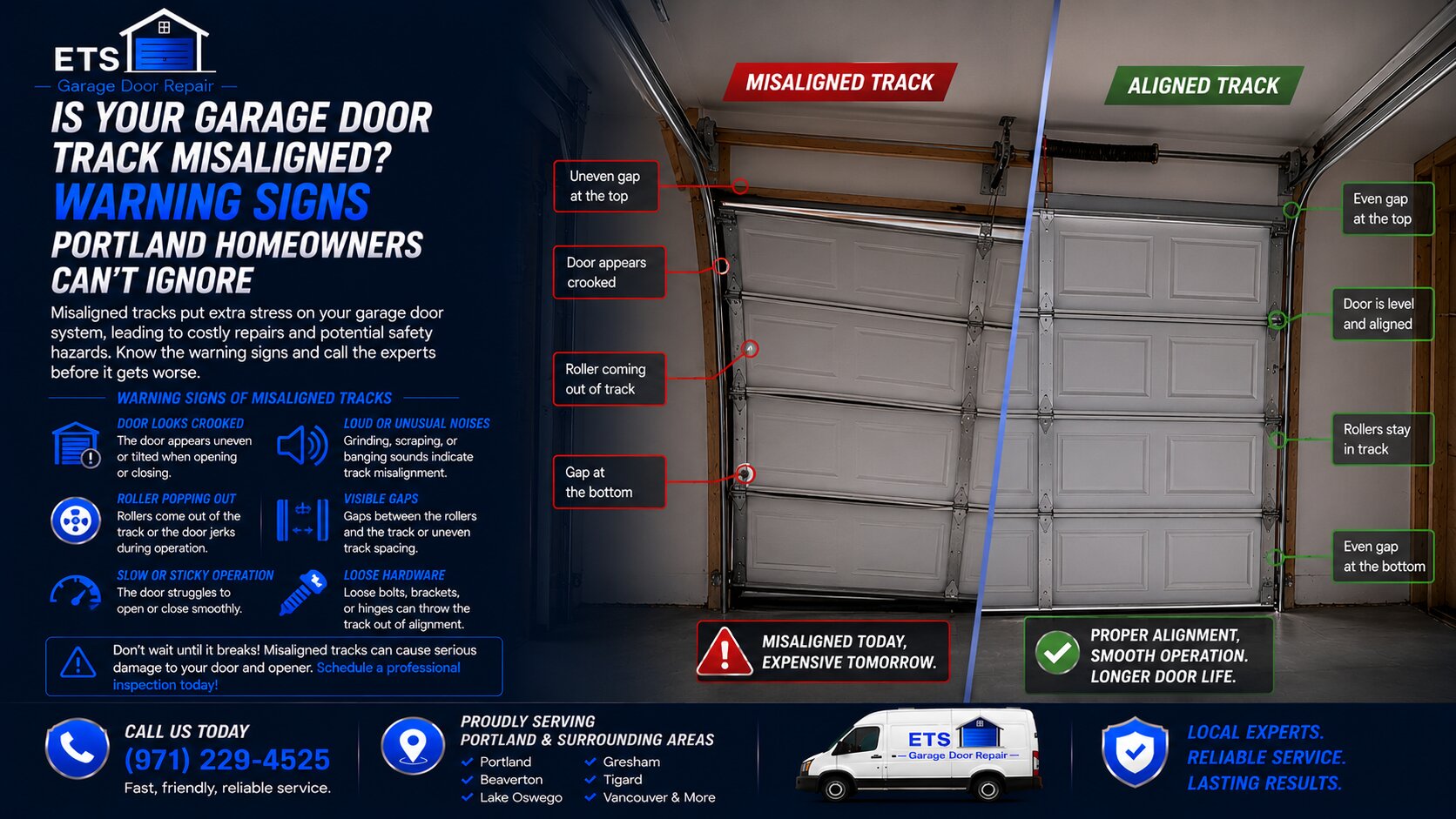
In older Portland homes, especially in neighborhoods like Laurelhurst and Eastmoreland, I often find tracks that have shifted over time due to house settling. This creates misalignment that prevents smooth operation, and Garage Door Drums Repair Or Replacement may be necessary to restore proper function.
When the Opener Motor Runs But Nothing Happens
If you hear the motor running but the door doesn’t move at all, the main drive gear inside the opener has likely stripped or broken. This is a common failure point in chain drive and belt drive systems after years of use.
You can sometimes hear a grinding or whirring sound without any corresponding door movement. This usually means internal gears need replacement, which requires taking apart the motor housing and potentially ordering Garage Door Parts to complete the repair.
This repair involves working with electrical components and heavy parts. I always recommend calling a professional for this specific issue rather than attempting a DIY fix.
Could Weather Be the Problem?
Portland’s constant rain and occasional temperature drops create unique challenges for garage door systems. Metal components contract in cold weather, which can make doors bind in their tracks.
I see a spike in stuck opener calls whenever we get those rare ice storms that hit the West Hills and surrounding areas. Cold weather thickens the lubricant in your tracks and can cause temporary binding.
If this happens, let your garage warm up slightly and try again. Consider switching to a cold-weather lithium grease for track lubrication if you live in higher elevations around Portland. Understanding What Is The Average Lifespan Of A Garage Door By Material can help you determine whether weather-related issues are due to age or maintenance needs.
Get Expert Help From Your Local Portland Team
Most stuck opener issues follow predictable patterns, and the troubleshooting steps above solve about 70% of the problems I encounter. But some situations require professional diagnosis, especially when safety cables, springs, or electrical systems are involved.
At ETS Garage Door Of Portland (Oregon CCB #218035), we’ve built our reputation on fast, honest service throughout the Portland metro area. If you’ve tried these steps and your opener still won’t cooperate, or if you’re not comfortable working around garage door components, give us a call.
We serve homeowners throughout Portland, Beaverton, Clackamas, and everywhere in between. Our team responds quickly because we know a stuck garage door isn’t just an inconvenience, it’s a disruption to your entire day. Let us get your door working smoothly again. If your system is experiencing frequent problems, you might want to explore The Best Time Of Year To Replace Your Garage Door for a long-term solution.
Company: ETS Garage Door Repair Of Portland
License: Oregon CCB #218035
Primary Service Hub: Portland, Multnomah, OR 97239
Immediate Support Line: (971) 229-4525
Core Service Coverage: Multnomah, Clackamas, Washington, Marion, and Lane Counties



Leave A Comment