

Table of Contents
The Right Way to Silence a Squeaky Garage Door
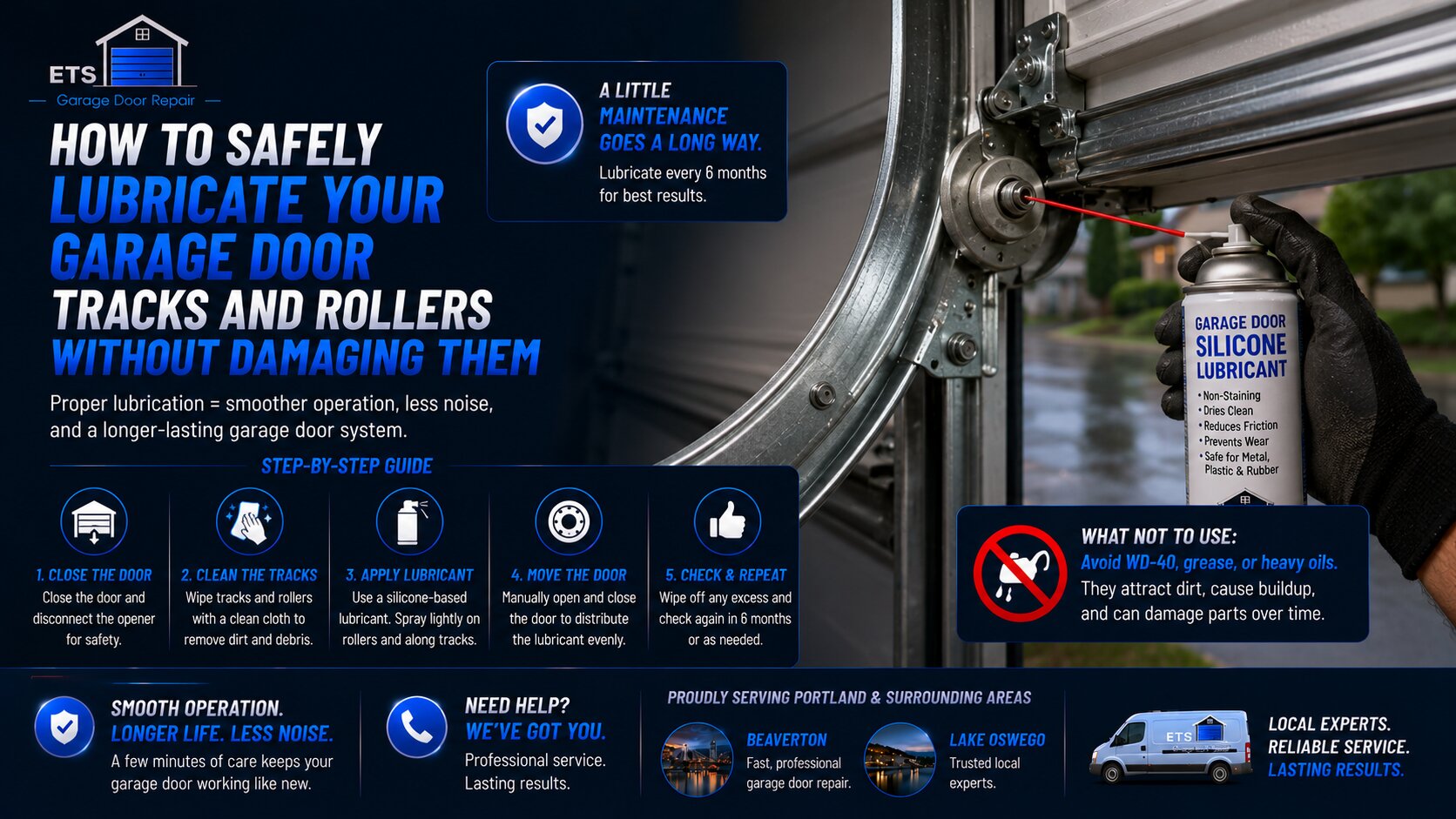
Most squeaky garage doors need proper lubrication on the rollers and hinges, not the tracks. Applying lubricant directly to the tracks actually attracts dirt and debris, creating a grinding paste that damages your door system over time.
After working on thousands of garage doors throughout Portland and Multnomah County, I’ve seen what happens when homeowners use the wrong products or lubricate the wrong components. Our team at ETS Garage Door Of Portland spends considerable time fixing damage caused by well-intentioned DIY lubrication attempts.
Let me walk you through the safe, professional approach we use that will quiet your door without creating new problems down the road.
What Parts of Your Garage Door Actually Need Lubrication?
The moving metal components require lubrication, while the tracks should remain clean and dry. Here’s what we lubricate during our maintenance calls:
- Rollers (the bearings inside, not the track surface)
- Hinges at each panel connection point
- Torsion springs (light coating only)
- Top roller brackets and bearing plates
- Lock mechanism if you have one
Notice that tracks aren’t on this list. The tracks should be wiped clean with a dry cloth, never coated with lubricant that will accumulate Portland’s seasonal pollen and dust.
Should You Use WD-40 or Silicone Spray on Garage Door Parts?
No, WD-40 is a degreaser and water displacer, not a lubricant. It will actually strip away existing lubrication and leave components dry within weeks.
We recommend white lithium grease or a silicone-based garage door lubricant spray. These products are designed to withstand Oregon’s temperature fluctuations and won’t break down in our high-humidity climate.
I keep both types in my service truck. Lithium grease works best for hinges and springs, while silicone spray is perfect for rollers since it penetrates the bearing without attracting excessive dirt.
Step-by-Step Lubrication Process We Use in Portland Homes
First, disconnect your garage door opener by pulling the emergency release cord. This prevents the door from moving unexpectedly while you work.
Clean the tracks with a dry cloth to remove debris. If you spot built-up grime, use a damp cloth followed by complete drying. Never leave moisture in the tracks, especially during Portland’s rainy season when rust forms quickly.
Apply lubricant to each hinge where metal meets metal. You only need a small amount, about the size of a pea per hinge. Wipe away any excess that drips.
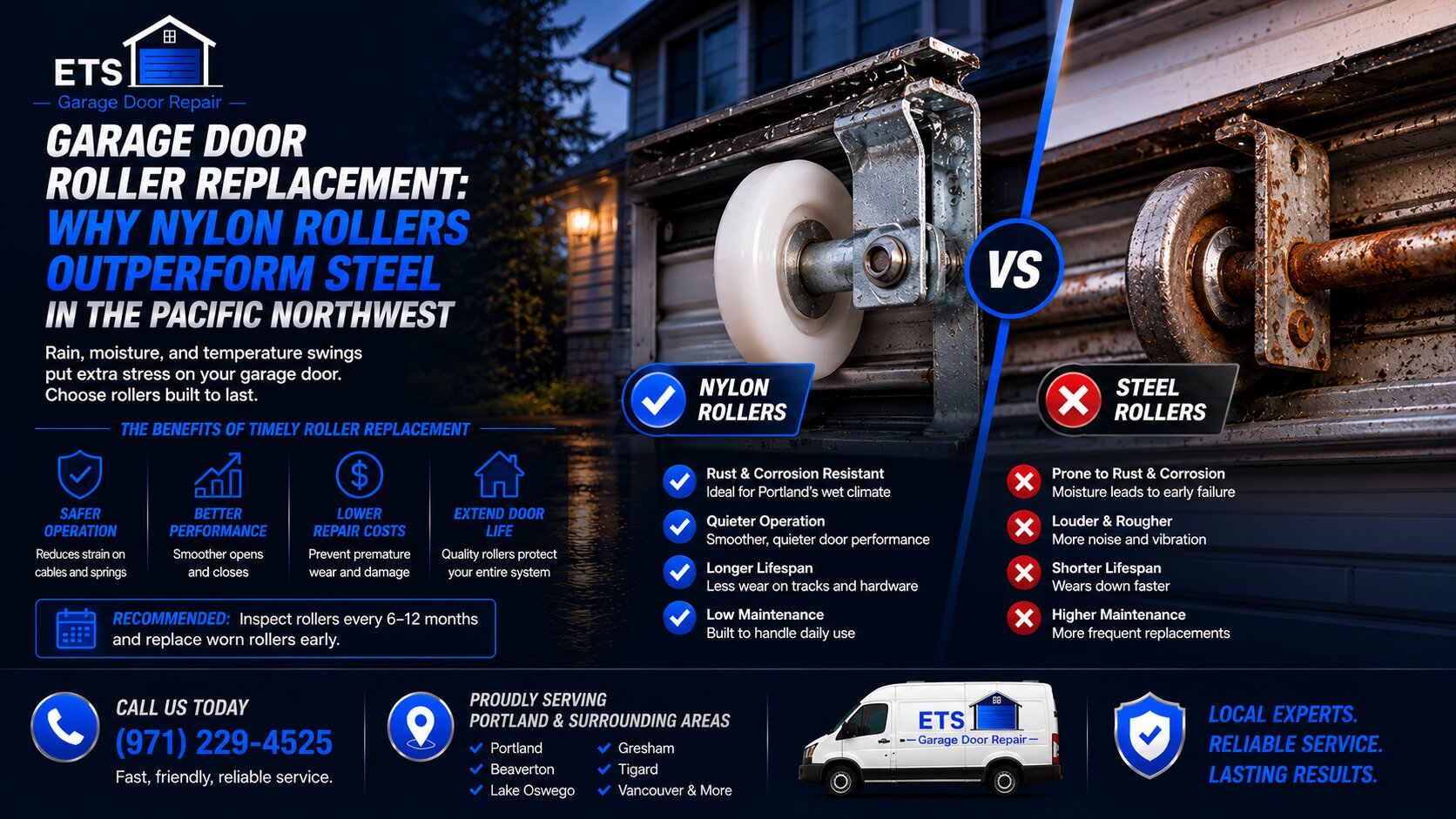
For the rollers, apply lubricant where the wheel meets the stem and shaft. If you have nylon rollers, lubricate only the steel ball bearings inside, not the nylon wheel itself. Metal rollers need coating on both the bearings and the outer wheel surface.
Lightly coat the torsion spring from end to end. This is the large spring mounted on the header above your door. Use caution here and never attempt to adjust or replace Garage Door Parts yourself, as they’re under extreme tension.
After lubricating all components, manually open and close the door several times. This distributes the lubricant evenly and helps you identify any remaining noise sources.
Common Lubrication Mistakes That Cause Bigger Problems
Over-lubricating creates as many issues as under-lubricating. Excess product drips onto your vehicles, attracts dirt, and creates a sticky residue that gunks up the entire mechanism.
Using automotive grease or cooking oils might seem logical, but these products weren’t formulated for garage door applications. They break down at different temperatures and can actually gum up your rollers, especially during cold Oregon winters when temperatures occasionally drop below freezing in areas like West Hills and Lake Oswego.
Ignoring unusual sounds is another mistake I encounter frequently. If lubrication doesn’t eliminate the noise, you likely have a worn roller, loose hardware, or a more serious mechanical issue that needs Garage Door Drums Repair/Replacement professional attention.
When Lubrication Isn’t Enough
Sometimes a squeaky door indicates failing components rather than simple friction. We regularly replace worn rollers in older homes throughout neighborhoods like Laurelhurst and the Pearl District, where many garage doors are 15 to 20 years old.
If your door still squeaks after proper lubrication, or if you notice grinding sounds and jerky movement, call our team at ETS Garage Door Of Portland. We’ll diagnose the underlying issue and prevent small problems from becoming expensive repairs.
Regular lubrication every six months keeps your garage door operating smoothly and extends its lifespan. It’s a simple maintenance task that takes 15 minutes but saves hundreds in premature part replacement. Our team is always here to help if you’re uncomfortable performing this maintenance yourself or if your door needs more than basic lubrication. A well-maintained garage door also provides better security for items stored inside, including The Most Efficient Way To Store Summer Toys In Your Garage, and proper maintenance can help you determine The Best Time Of Year To Replace Your Garage Door when repairs are no longer cost-effective.
Company: ETS Garage Door Repair Of Portland
License: Oregon CCB #218035
Primary Service Hub: Portland, Multnomah, OR 97239
Immediate Support Line: (971) 229-4525
Core Service Coverage: Multnomah, Clackamas, Washington, Marion, and Lane Counties










Leave A Comment